
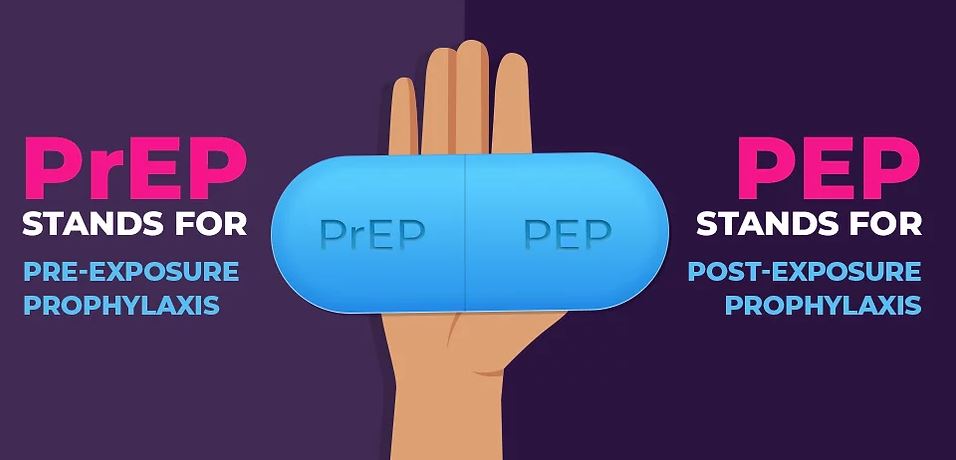
What is PEP? Is it different than PrEP?
Post-Exposure Prophylaxis (PEP)

PEP is the use of antiretroviral drugs after a single high-risk event to stop HIV seroconversion. PEP must be started as soon as possible to be effective—and always within 72 hours of a possible exposure.
Resources for Consumers
Basic PEP Q&As – learn the basics about PEP and if it’s right for you.
PEP 101 Consumer Info Sheet (English and Spanish) pdf icon[PDF – 706 KB]
PrEP vs PEP

What is the difference between PrEP and PEP?
Pre-exposure prophylaxis is also known as PrEP. It is an HIV prevention medication in which HIV-negative people take an oral pill once a day before coming into contact with HIV. This helps to reduce their risk of HIV infection. The drug must be taken for at least 7 days to reach optimal levels of protection against HIV.
This contrasts post-exposure prophylaxis also known as PEP. PEP is an HIV prevention strategy in which HIV-negative people take anti-HIV medications after coming into contact with HIV to reduce their risk of HIV infection. PEP must be started within 72 hours after HIV exposure.
To learn more about PrEP, check out:
To learn more about PEP, check out these sites:

